











Understanding Relational Turbulence, Nervous System Adaptation, and Traumatic Bonding Through Clinical Support
For many individuals, stable, quiet, and predictable relationships feel strangely uncomfortable, boring, or even anxiety-inducing. Instead, they find themselves repeatedly drawn to high-drama, unpredictable, and emotionally turbulent dynamics, a pattern often described as an addiction to chaotic relationships. While intellectually recognizing that these unstable situations cause profound distress, the emotional and physiological urge to remain in or repeat them can feel almost impossible to break. From a clinical and neurobiological perspective, this behavior is not a flaw in character or a conscious desire for pain; it is a deeply encoded survival response. When an individual’s early developmental landscape is defined by inconsistency, emotional volatility, or unpredictable affection, the subconscious mind learns to equate drama with passion, and uncertainty with connection. At TalkTime, we view relational turbulence as a manifestation of a dysregulated nervous system seeking familiar attachment loops. Providing specialized mental health support helps individuals across the UAE break free from destructive relational patterns, enabling people to restore internal safety and build healthy, grounded intimacy through discreet therapy.
The Neurochemistry of Drama: Intermittent Reinforcement and Biological Highs
The intense pull of chaotic relationships is heavily driven by powerful neurochemical cycles within the brain, particularly those involving dopamine and cortisol. Unpredictable relational dynamics operate on a psychological mechanism known as intermittent reinforcement, the same mechanism that makes gambling addictive. When affectionate, loving moments are interspersed with sudden withdrawal, explosive arguments, or emotional coldness, the brain experiences massive spikes of dopamine during the reconciliation phases. This neurochemical roller coaster creates a profound biological high that bonds individuals to the chaotic dynamic. The cycle of high stress followed by intense relief mimics chemical dependency, making stable relationships feel flat or unfulfilling by comparison.
Nervous System Adaptation: Mistaking Familiarity for Safety
The human autonomic nervous system is wired to seek what is familiar, even if that familiarity is painful. If your early life involved navigating volatile caregivers, emotional unpredictable environments, or walking on eggshells to maintain peace, your baseline state of neural activation was set to high alertness. In adulthood, a calm, stable partner who offers consistent affection does not trigger that familiar sensation of hyper-vigilance. Paradoxically, the absence of threat can be interpreted by a traumatized nervous system as a dangerous lull before a storm, generating intense anxiety. Consequently, individuals often mistake the anxiety and adrenaline of a chaotic dynamic for chemistry, passion, or deep love, while dismissing safety as a lack of connection.
Deconstructing Traumatic Bonding and Building Grounded Intimacy
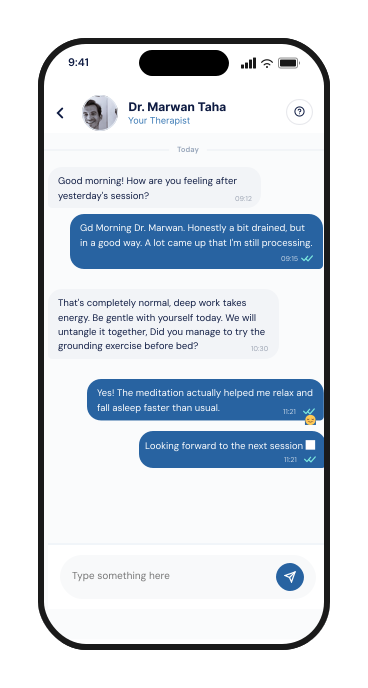
Breaking the cycle of chaotic relationships requires retraining the nervous system to recognize safety as peaceful rather than threatening. This process involves identifying core attachment wounds, processing unresolved developmental trauma, and building somatic tolerance for calm, predictable interactions. When you begin to dismantle the subconscious belief that love must be earned through suffering, you open the door to genuine emotional intimacy. Learning to establish firm boundaries, regulate your internal alarm system, and honor your true needs allows you to step out of high-drama loops. Transitioning away from turbulent relationships requires structured support, and accessing counselling online provides a secure, confidential environment to rebuild self-trust and establish healthy relational baselines.
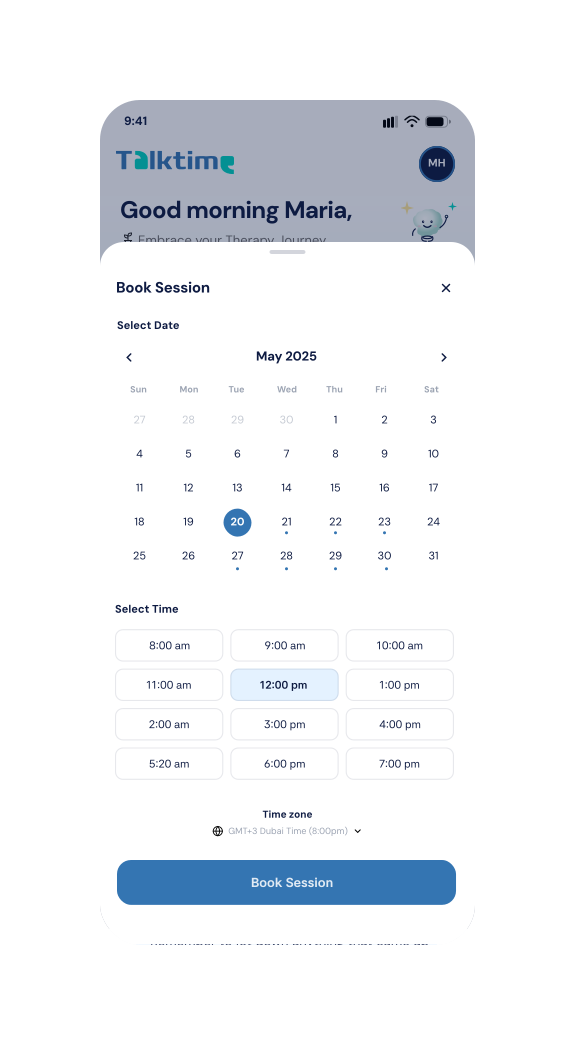
Download the TalkTime app today or visit our website to start your therapy journey with our network of accredited therapists.